

Hybrid Office Desk Ratio: How Many Desks Your Team Needs
Your hybrid office desk ratio should come from how many people turn up on your busiest day, not from the number on the payroll. This guide shows you how to measure it, what the HSE rules say, and how it shapes an office move.
Start with the right number
Why Headcount Is The Wrong Starting Number For Desks
Most offices were planned on a simple sum: one person, one desk. Hybrid working broke that sum. If your team works two or three days a week in the office, a desk for every name on the payroll means many desks sit empty most days.
Empty desks still cost money. You pay for the floor space, the heating, the cleaning and the furniture. When a lease ends and you plan a move, it is the best time to ask a simple question: how many desks do we really need?
The answer is your hybrid office desk ratio. It is the number of desks you provide compared with the number of staff. A ratio of 7 to 10 means seven desks for every ten people. Pick it from facts, not hope, and the rest of the move falls into place.
We are CMR Relocation, an office removal firm based in Broadheath, Altrincham. Darrin, who runs the business, has seen firms across Trafford and Manchester get this right and get it wrong. This guide shares what our team has learned, plus what the official rules say.
The national picture
What The ONS Says About Hybrid Working In Great Britain
Before you look at your own team, it helps to know how common hybrid working is.
The Office for National Statistics (ONS) tracks how people work. In its article Who has access to hybrid work in Great Britain, published in June 2025, the ONS found that 28% of working adults in Great Britain hybrid worked between January and March 2025. That is more than one in four.
The same article shows that hybrid working is far from even. It was most common among people aged 30 to 49, people with a degree, full-time employees and higher earners. Workers with a degree were about ten times more likely to hybrid work than those with no qualifications.
What does that mean for you? A national average tells you hybrid working is here to stay. It does not tell you how many desks your own office needs. A design studio, an accounts team and a customer service floor can all have very different patterns. That is why the next step is to measure your own office.
- Hybrid working is common, so a one-desk-each office is now the exception for many teams
- Patterns vary by job type, age and contract, so national figures are only a backdrop
- Your own attendance data is the only safe base for a desk ratio
Measure first
Measuring Your Own Peak Days Before You Commit
The number that matters is your peak, not your average. If 40 people come in on a Tuesday and 15 on a Friday, the average of about 27 will leave a lot of people standing on Tuesday. Plan the space for the busy day, then decide how to smooth it.
Start with data you already have. Door entry or badge records show who came in and when. A desk booking app shows who reserved a seat. Wi-Fi log-ins can also give a fair count. If you have none of these, a manual count works well. Walk the floor at about 10am and 2pm each day and count the people at desks.
Count for at least two weeks, and four if you can. Avoid school holidays and the week before Christmas, as they make the office look quieter than it is. Note team days, board meetings and monthly events, because these set your true peak.
- Record the busiest day each week, not just the average
- Split the count by team, so you can see who needs to sit together
- Note how many people used meeting rooms and quiet rooms
- Ask managers about planned growth over the length of the new lease
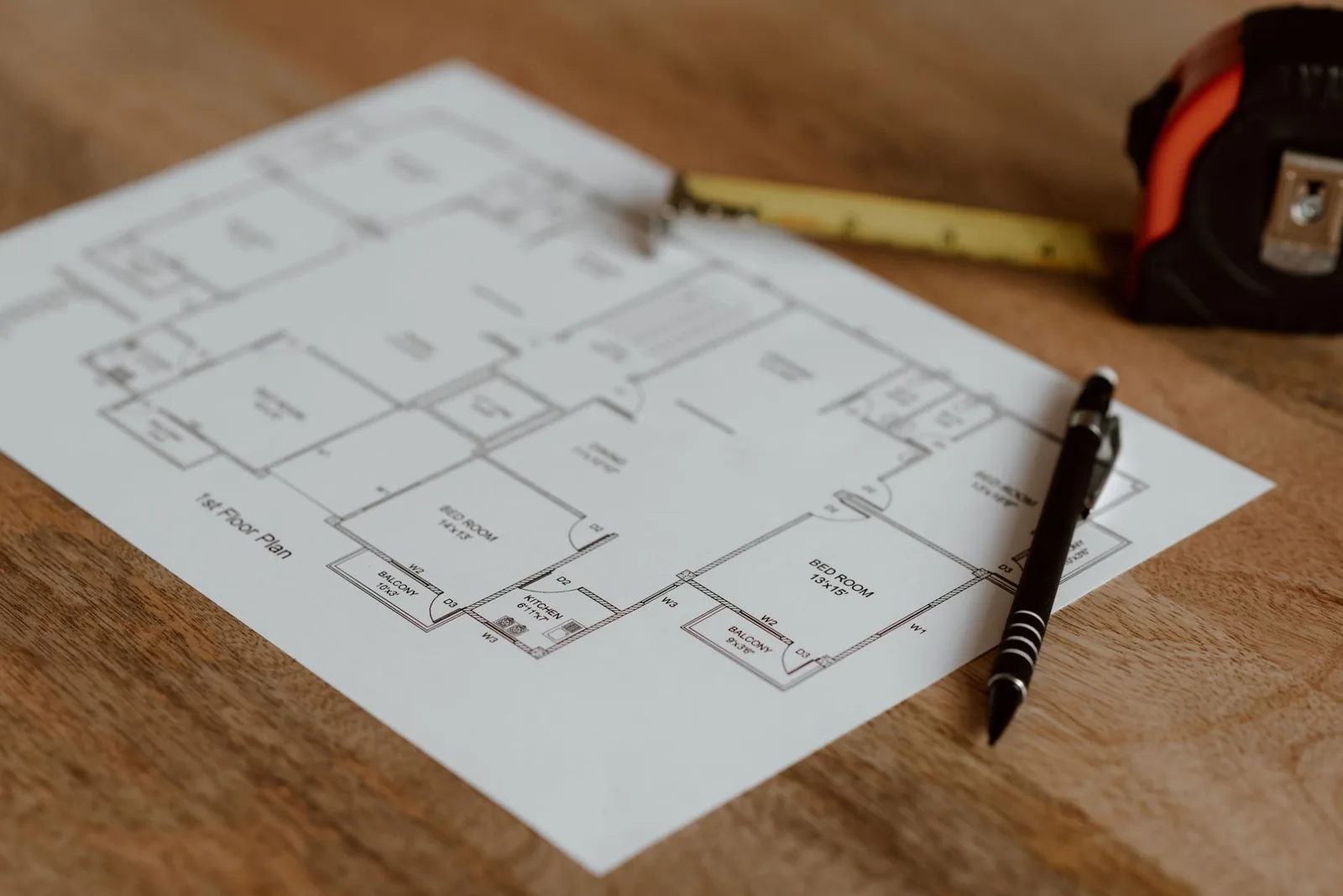
Bring this count to your space plan. Our space planning service for workplaces works to your floor plan and patching plan, so the desk number you choose turns into a real layout.
Worked example
Desk Ratios Explained With A Worked Example
The figures below are a made-up example for a firm of 60 staff. They are not a client of ours and not a target for your business.
| Step | Hypothetical figure | How it is worked out |
|---|---|---|
| Staff on the payroll | 60 | Everyone who may use the office |
| Busiest day counted | 39 people | Highest count over four weeks of checks |
| Peak as a share of staff | 65% | 39 divided by 60 |
| Buffer for growth and visitors | +5 desks | A choice made by the managers |
| Desks to provide | 44 | 39 plus 5 |
| Desk ratio | About 7.3 desks per 10 staff | 44 divided by 60 |
| Meeting and quiet spaces | 2 meeting rooms, 3 quiet booths | Based on how often rooms were full |
In this example, the firm frees up 16 desks compared with one each. That space can become a meeting room, a quiet zone or simply a smaller, cheaper office. Note the buffer. A ratio set exactly at the peak leaves no room for a new starter or a visiting client.
Some firms also set team days, so each team comes in on fixed days. This flattens the peak and can lower the desk count further. It only works if people stick to it, so test it for a few weeks before you sign for less space. If you are also looking at new premises, our guide on choosing office space that is ready for a move covers what to check before you sign.
The legal floor
HSE Space Per Person And Why It Still Applies
A lower desk ratio does not let you pack more people into a room than the law allows.
The Workplace (Health, Safety and Welfare) Regulations 1992, regulation 10, says every room where people work must have enough floor area, height and unoccupied space for health, safety and welfare.
The HSE Approved Code of Practice, L24 Workplace health, safety and welfare, gives the working figure. In most workplaces, 11 cubic metres of space per person should be taken as a minimum. Ceiling height above 3 metres does not count. HSE gives an example: with a 2.4 metre ceiling, you need a floor area of about 4.6 square metres per person.
HSE also warns that 11 cubic metres may not be enough if much of the room is taken up with furniture or equipment. The minimum does not apply to rooms used for meetings or lectures.
| Ceiling height | Floor area per person (HSE example) | Source |
|---|---|---|
| 2.4 metres | About 4.6 square metres | HSE L24, paragraph 99 |
| 3.0 metres or higher | About 3.7 square metres | HSE L24, paragraph 99 |
So check your peak count against the room size, not just your desk count. A hot desking ratio cuts desks, but on your busiest day every person in the room still needs that space.
Shared desks
Shared Desks And The Display Screen Equipment Rules
Most office desks have a screen, so the Health and Safety (Display Screen Equipment) Regulations 1992 apply. HSE's guidance on working safely with display screen equipment says employers must assess workstations, reduce risks, offer eye tests when asked, and give training.
Shared desks need extra thought. HSE says workers should carry out a basic risk assessment if they change desks regularly. The easiest way to do that is to make every desk easy to adjust.
- Chairs with simple height and back adjustment
- Monitor arms, so screens can move to eye level
- The same dock and cables on every desk, so laptops just plug in
- A short desk checklist staff can run in a minute
- Lockers, so nobody leaves kit on a shared desk
Our IT relocation team labels docks and screens by desk number, not by person, so each hot desk is set up the same way in the new office.
Surplus furniture
What Happens To The Desks You No Longer Need
A lower desk ratio leaves you with spare furniture. Plan for it early, because it affects the move day, the crates and the cost.
Some of it can come with you as spares. Some can go into our containerised storage in Broadheath while you test the new layout. That is useful if you are not yet sure your peak count will hold. There is no minimum term, so you can review it after a few months.
The rest can be cleared. Our business clearance service offers good furniture to local charities and schools first. What is left is broken down into metal, wood and laminate for recycling. Old IT goes through WEEE-compliant disposal.
If you are buying new, our team sells, installs and dismantles desks and chairs. See our desk and chair supply and fitting for details. If you are leaving a leased building, read our guide to lease-end dilapidations and handback, as clearing out is part of handing the space back.

Move day
Moving Into A Smaller Hybrid Office Without Losing A Day
Once the ratio is fixed, the move itself follows a clear order.
- 1
Fix the desk count
Agree the ratio with managers and sign off the number of desks, rooms and booths.
- 2
Draw the layout
Turn the count into a floor plan, with each desk numbered and each data point marked.
- 3
Label and crate
Staff pack personal items into lockers or crates, and kit is labelled by desk number.
- 4
Move out of hours
We move at weekends or overnight when needed, so staff log in to a working desk.
Crates make shared desks simple. Our crate hire for business moves includes lidded crates, IT crates and hanging-file crates, delivered at least ten days before the move. With hot desks, each person usually needs fewer crates, because most kit lives in a locker, not on a desk.
Our step-by-step office move checklist covers the wider plan, from telling clients to setting up post. For a larger move, you can read how we handled furniture and floor-box moves in our AVEVA case study. When you are ready, our commercial removals team in Manchester can plan the whole move with you.
Talk to Darrin on 0161 478 3639 or email Darrin. CMR Relocation has moved offices across Manchester, Trafford and Cheshire since 2011, and you can read what clients say on Trustpilot.
Know your desk count? Send us your floor plan and we will come back with a free quote for the move.
Get a free quoteFAQs
Hybrid Office Desk Ratios: Your Questions Answered
Still unsure about something in this guide? Darrin is happy to talk it through.
Is there an official hybrid office desk ratio?
No. There is no law or HSE rule that sets how many desks you need per member of staff. What the law does set is a minimum amount of space per person in a workroom, and rules for display screen workstations. The ratio is a business choice, so base it on your own attendance data.
What is a common hot desking ratio?
Many firms talk about ratios such as six or seven desks for every ten staff, but these are rules of thumb, not standards. Two firms with the same headcount can need very different numbers. Count your real peak days for at least two weeks before you pick a figure.
How do I measure how many people come into the office?
Use the data you already have. Door entry or badge records, desk booking systems and Wi-Fi log-ins all show who was in. If you have none of these, do a simple head count at mid-morning and mid-afternoon every day for two to four weeks, and note the busiest day.
Do hot desks need a DSE assessment?
Yes. HSE guidance says workers should carry out a basic risk assessment if they change desks regularly. In practice that means adjustable chairs, screens that can be moved to the right height, and a short check each time someone sits at a new desk.
What happens to the desks we no longer need?
You have choices. Some furniture can move to the new office, some can go into storage while you test the new layout, and the rest can be cleared. CMR Relocation offers good furniture to local charities and schools first, then breaks the rest down for recycling.
Should we cut desks before or after the move?
Decide before. The desk number drives the floor plan, the furniture order, the data points and the crate count. Changing it after the move means paying twice for the same work. Settle the ratio, then plan the layout around it.
Local area data
Compare towns across Greater Manchester and Cheshire
Thinking about where to move? Tap a town for its prices, schools, crime and commute.
Contains public sector information licensed under the Open Government Licence v3.0, including HM Land Registry data © Crown copyright and database right 2026. Data sources and notes
Prefer a list? Show all 48 towns
Manchester
Rochdale
Cheshire East
Cheshire West and Chester
Warrington
Not on the list?
Your town may still be close by. Call 0161 478 3639 to ask about your town.
Not on the list?
Your town may still be close by. Call 0161 478 3639 to ask about your town.
Not on the list?
Your town may still be close by. Call 0161 478 3639 to ask about your town.