

Business Waste Regulations For An Office Move
An office move throws up more waste than any normal month, and the business waste regulations for an office move apply to all of it. This guide explains the rules in plain English, with the dates that changed in 2025 and 2026.
Why this matters
Why An Office Move Is A Waste Event In Law
Most offices produce a steady trickle of waste: paper, cups, food and the odd broken chair. A move turns that trickle into a flood. Old desks, filing cabinets, printers, phones, cables, files and kitchen kit all need a home in the space of a few weeks.
The law does not care that it is a one-off. The business waste regulations for an office move are the same rules you follow every day, applied to a much bigger pile. Your business is the waste producer. That means you carry the legal duty, even when someone else takes the waste away.
I'm Darrin, and I run CMR Relocation from our depot in Broadheath, Altrincham. Our team has cleared and moved offices across Manchester and Cheshire since 2011. This guide is the law behind the work: what you must do, what changed in 2025 and 2026, and where to check the source yourself. It is not legal advice. If you are unsure, ask your solicitor or your local council.

The core rule
Your Waste Duty Of Care, In Plain English
The duty of care comes from section 34 of the Environmental Protection Act 1990. Government sums it up in one line.
Anyone who produces waste must keep it safe, make sure it is dealt with responsibly, and only give it to businesses that are allowed to take it. The full detail is in the waste duty of care code of practice on GOV.UK. In practice, it boils down to five jobs for your business.
- Cut waste first. Follow the waste hierarchy: prevent, reuse, recycle, recover, and only then dispose.
- Store it safely. Keep waste secure and contained until it is collected. A skip left open in a shared yard is a risk.
- Describe it properly. Each load needs a written description, including its waste code.
- Check who takes it. The carrier must be registered to carry waste.
- Keep the paperwork. Hold transfer notes for two years, and hazardous waste notes for three.
The duty does not end when the van drives off. If a carrier you hired fly-tips your old desks, you can be asked to show that you took reasonable steps. That is why the checks below matter. An officer from the Environment Agency or your council can ask to see your waste description, and can issue a fixed penalty notice if you cannot produce it.
Before anything leaves
Checking Your Waste Carrier And Keeping Transfer Notes
Anyone who carries waste for a business must be registered with the Environment Agency in England. You can check a name in seconds on the public register of waste carriers, brokers and dealers. Search by company name or postcode. Check that the details match the firm in front of you, and note the date you checked.
Then fill in a waste transfer note for each load. It is a short form, often on paper, sometimes in the carrier's app. It must include:
- A description of the waste and its code from the List of Wastes
- How much there is and how it is packed, for example in bags or loose
- The time and place of the transfer
- The names and addresses of both parties, signed by both
For regular collections of the same waste, a single note called a season ticket can cover up to one year. A move is usually a one-off, so plan on a note per load. Keep every note for two years.
Hazardous waste follows stricter rules. The GOV.UK hazardous waste guide lists examples such as print toner and batteries, and an office clear-out often finds both. Hazardous loads travel with a consignment note, which you keep for three years.
If you would like us to take part of the load, ask us what paperwork comes with the job. Check any firm on the register yourself, us included. It takes a minute and it protects your business.
England, 2025 and 2027
Simpler Recycling: What Changed For Workplaces In 2025 And 2027
Simpler Recycling is the biggest change to office waste in years. It sets out what every workplace in England must sort.
| Who | Must separate from | What to sort |
|---|---|---|
| Businesses with 10 or more full-time equivalent staff | 31 March 2025 | Dry recycling, food waste, general waste |
| Micro-firms with fewer than 10 full-time equivalent staff | 31 March 2027 | The same three streams |
| Charities and public bodies with similar waste | In line with their size | The same three streams |
The three streams are dry recycling (plastic, metal, glass, paper and card), food waste, and the general waste that is left. Paper and card should be kept apart from the other dry recycling where you can. Part-time staff count in proportion to their hours. Contractors, the self-employed and volunteers do not count. The source is the government page on workplace recycling in England, last updated in October 2025.
Why does this matter for a move? Because the new office needs the right bins from day one. Plan space for them in the kitchen and on each floor, and make sure your new waste contract covers food waste. When you plan the layout, treat the bins like furniture. Our office space planning service can mark them on your floor plan with everything else.
The clear-out in the old office is a good time to start. Set out labelled boxes for paper, cans and plastic while people empty their desks. It keeps the recycling clean, and clean recycling is easier to place.
Electrical kit and data
Old Computers, Phones And Printers: WEEE And Data Wiping
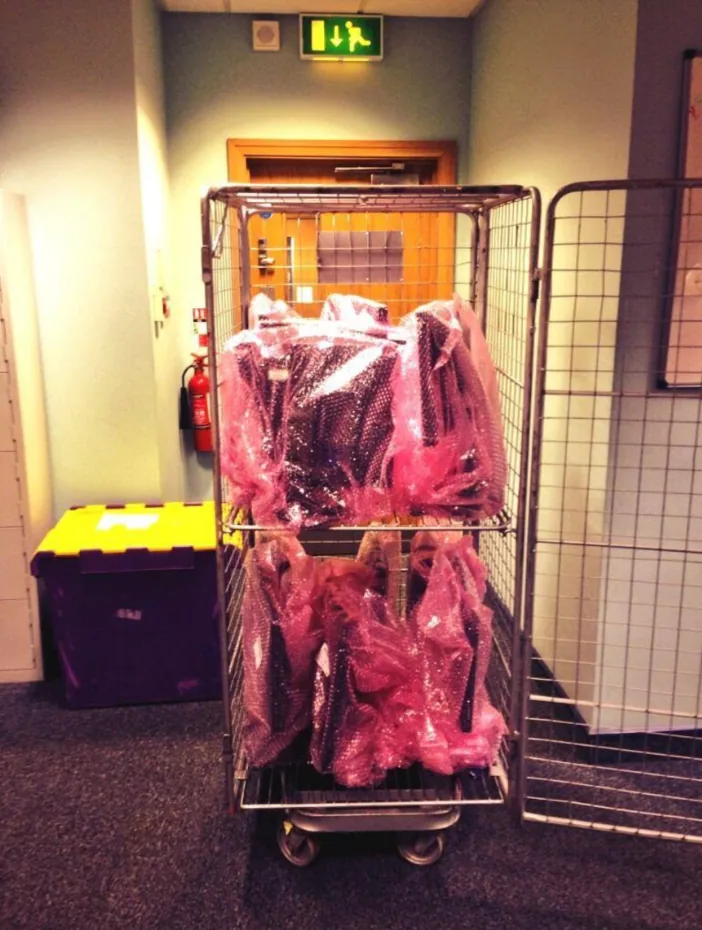
Anything with a plug or a battery is electrical waste when you get rid of it. That is WEEE, short for waste electrical and electronic equipment. It must not go in general waste or a skip. It has to go to a route that can treat it.
For kit sold for business use after 13 August 2005, the producer pays for collection and treatment through its compliance scheme. Ask your supplier how its take-back works, especially when you are buying new kit. The detail is in the GOV.UK producer guidance for electrical equipment.
Data is the bigger risk. Laptops, phones, printers and copiers can all hold personal data. The ICO guidance on deleting data from devices lists secure deletion software, physical destruction and specialist services. Agree the method with your IT team and keep proof for each device.
Our crew disconnects and packs computers in-house, and our disposal route for retired IT is WEEE-compliant. See our IT relocation service for the move itself.
Paper records
Confidential Paper Waste When You Empty The Filing Cabinets
Every office move uncovers old files. Some must be kept, some can go, and most contain names, addresses or bank details. UK GDPR says personal data must be kept secure, right up to the moment it is destroyed. Leaving a sack of HR files in the corridor overnight puts that at risk.
Start with your retention policy. Decide what you must keep, what you can scan and what can be shredded. Then use lockable confidential waste bins or sacks that stay sealed until collection. Ask the shredding firm for a certificate of destruction for each collection, and file it with your transfer notes.
Files you keep should move in sealed crates. We deliver lidded crates and hanging-file crates at least ten days before the move, so staff can pack files straight from the cabinet. Read more about hiring crates for files and IT.

New from October 2026
Digital Waste Tracking From October 2026: What It Means For You
The government is moving waste records online, to make it harder for waste criminals to hide. The rollout comes in phases, and it is easy to read the headlines and think it applies to you now.
| Phase | Who must use digital waste tracking | From |
|---|---|---|
| Phase 1 | Permitted sites that receive waste in England and Wales | 1 October 2026 |
| Phase 1 | Receiving sites in Scotland | January 2027 |
| Phase 2 | Waste carriers, brokers and dealers | October 2027 |
So an office producing waste does not report to the service itself. The site that takes your waste does, within two working days of receiving it. You can read the plan on the GOV.UK page about developing the digital waste tracking service, and the receiver rules on the page explaining who must report waste they receive.
What changes for you is quality. The details on your transfer note will feed the site's digital record. Accurate waste codes and weights make that easy. Vague notes such as "office junk" will stand out.
Put it together
A Compliant Clear-Out Plan For Your Office Move
Here is the plan we would follow on our own clear-out, step by step. Give each line a name and a date, then add it to your wider six-month move planning checklist.
- Walk the office with a list. Mark every item as move, reuse, recycle or dispose.
- Offer good furniture for reuse first. We offer desks and chairs to local charities and schools before anything is broken down.
- Split what is left into metal, wood and laminate, so each part can be recycled.
- Pull out all electrical kit and keep it apart for WEEE treatment.
- Wipe or destroy every data drive, and record the method for each one.
- Seal confidential paper in locked bins and get a certificate of destruction.
- Check each carrier on the public register and file the result.
- Fill in a transfer note per load, with the right waste code.
- Set up three-stream recycling in the new office before day one.
For the hands-on side, our office clearance and recycling service handles the reuse and recycling steps. If you are buying new desks for the new office, our office furniture supply and fitting team can plan the old and the new together.

Lease end
Waste At Lease End: Why The Landlord Cares Too
Waste and the lease often meet on the last day. Most leases expect you to hand the office back empty. Furniture, cables and rubbish left behind can lead to a claim, and can even affect a break clause. Plan the clear-out so it finishes before you hand back the keys, not after.
Our guide to dilapidations and lease-end handback explains the landlord's side in more detail. It helps to read both before you fix a date with your removal firm.
Big moves show how it works. On jobs such as the AVEVA Manchester move and the Z+F relocation case study, the move, the furniture and the old kit all had to be planned as one job. Treat waste as part of the move, not an afterthought, and the last week is far calmer.
We are open Monday to Saturday, 8:30am to 5:30pm. Call Darrin on 0161 478 3639 or email Darrin to talk through your move and clear-out.
Planning an office move and a clear-out together? Tell us what is going and what is staying, and we will plan both.
Get a free quoteFAQs
Office Move Waste Rules: Questions From Office Managers
Still unsure about something in this guide? Darrin is happy to talk it through.
Do we need a waste transfer note for an office clear-out?
Yes, for each load of waste that leaves your premises, unless it is covered by a season ticket for regular transfers. The note describes the waste and records who took it. Keep a copy for two years. For hazardous waste you need a consignment note instead, and you keep that for three years.
Is furniture given to a charity classed as waste?
Not if it is reused as it is. Giving desks and chairs to a charity or school is reuse, which sits above recycling in the waste hierarchy. Keep a simple record of what went where. Anything the charity turns down and you throw away becomes waste, and the duty of care applies to it.
Does Simpler Recycling apply to a small office?
It depends on your size. Businesses with 10 or more full-time equivalent staff in England have had to separate their recycling since 31 March 2025. Micro-firms with fewer than 10 have until 31 March 2027. Part-time staff count in proportion to their hours.
Do we have to use digital waste tracking from October 2026?
Not as a business producing office waste. The first phase, from 1 October 2026, applies to permitted sites that receive waste in England and Wales. Carriers, brokers and dealers are due to follow from October 2027. You still keep transfer notes as before.
Is a factory reset enough before old laptops leave the office?
Not always. The ICO lists secure deletion software, physical destruction and specialist services as options, and a quick reset may not suit drives that held sensitive data. Agree the method with your IT team, and ask for written proof of erasure or destruction for each device.
Who checks that our waste carrier is genuine?
You do. The duty of care sits with the business that produces the waste. Search the carrier on the Environment Agency public register before the job, check the name and address match, and keep a note of what you checked and when.
Local area data
Compare towns across Greater Manchester and Cheshire
Thinking about where to move? Tap a town for its prices, schools, crime and commute.
Contains public sector information licensed under the Open Government Licence v3.0, including HM Land Registry data © Crown copyright and database right 2026. Data sources and notes
Prefer a list? Show all 48 towns
Manchester
Rochdale
Cheshire East
Cheshire West and Chester
Warrington
Not on the list?
Your town may still be close by. Call 0161 478 3639 to ask about your town.
Not on the list?
Your town may still be close by. Call 0161 478 3639 to ask about your town.
Not on the list?
Your town may still be close by. Call 0161 478 3639 to ask about your town.